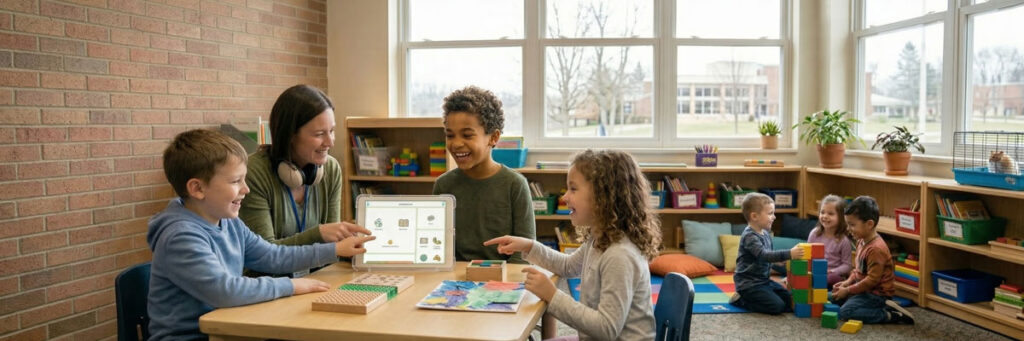
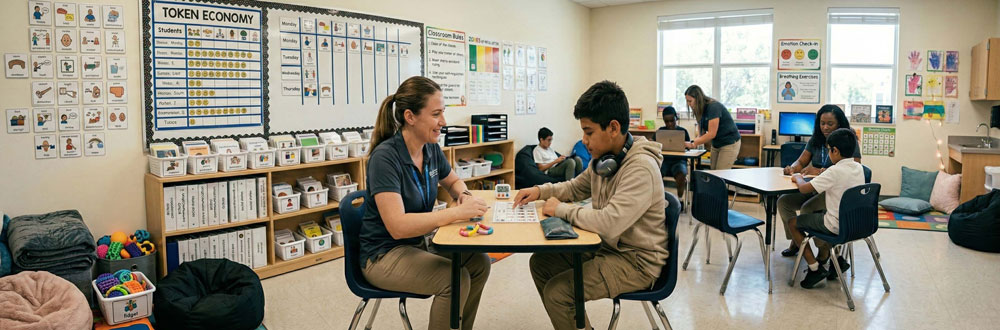
Inclusive education is no longer optional. Teachers are expected to meet grade-level standards while addressing diverse behavioral and learning needs. Effective classroom autism support requires structure, clarity, and consistent implementation of evidence-based strategies.
Students with autism often experience difficulty with transitions, task initiation, peer interaction, sensory regulation, and compliance with group instruction. These behaviors are rarely defiance. They are skill deficits that require structured intervention.
Why Classroom Autism Support Matters
Without proactive systems, classrooms can become reactive environments. Teachers may spend more time addressing behavior than delivering instruction, which can contribute to educator burnout and student frustration.
Strong classroom autism support systems can help reduce disruption and increase student engagement across the classroom. Structured environments often help lower anxiety, while predictable routines can encourage participation and support learning.
Use Visual Structure to Reduce Anxiety
Students with autism benefit from visual clarity. Implement:
- Daily visual schedules
- Visual timers for transitions
- Step-by-step task strips
- Clear workstation organization
When students know what is coming next, resistance decreases. Transition-related behavior often drops significantly once predictability increases.
Avoid relying solely on verbal directions. Visual systems create independence.
Define Clear Behavioral Expectations
Vague instructions create confusion. Instead of saying behave appropriately, define observable behaviors:
- Sit with feet on the floor
- Raise your hand before speaking
- Begin work within one minute
Clear expectations increase compliance because students understand exactly what success looks like. Consistency across staff members is critical. Mixed signals weaken progress.
Build Momentum Before Difficult Tasks
Use high probability request sequences to increase cooperation. Before presenting a challenging assignment:
- Give two to three simple directions
- Ensure quick success
- Immediately follow with the academic demand
This builds behavioral momentum and reduces refusal. Students are more likely to comply after experiencing immediate success.
Reinforce More Than You Correct
One of the most overlooked elements of effective classroom autism support is reinforcement frequency. If a student calls out, reinforce hand raising immediately. If a student leaves their seat, reinforce brief periods of appropriate sitting.
Reinforcement may include:
- Specific verbal praise
- Token systems
- Classroom points
- Access to preferred activities
Immediate, specific reinforcement produces faster behavior change than repeated correction.
Provide Purposeful Sensory Supports
Sensory tools should be proactive, not reactive. Consider:
- Scheduled movement breaks every 30 to 45 minutes
- Flexible seating options
- Noise-reducing headphones during high stimulation periods
- Calm down areas for emotional regulation
These supports help prevent escalation rather than serving as rewards after disruption.
Use Data to Guide Decisions
Effective classroom autism support relies on measurement. Track:
- Frequency of target behaviors
- Duration of episodes
- Time of day patterns
- Response to specific interventions
Even simple tally systems can reveal patterns. If a strategy is not working, adjust based on data rather than frustration. Data removes guesswork.
Strengthen Team Collaboration
Consistency across environments can support skill development. When teachers, RBTs, and BCBAs align on:
- Reinforcement systems
- Prompting strategies
- Behavior intervention plans
- Communication methods
Students experience more predictable expectations. Predictability can help reduce anxiety and support participation in learning.
Inclusion without structure can contribute to staff burnout. Inclusion supported by ABA principles helps provide clear systems for instruction and behavioral support. Students with autism do not require lowered expectations. They benefit from structured environments, consistent reinforcement, and individualized supports.
Strong classroom systems can support positive learning experiences for students with autism while also benefiting the overall classroom environment. When implemented consistently, evidence-informed strategies help classrooms operate more proactively and support inclusive learning.