
Why Communication Development Matters
Communication is a central part of how children express their needs, interact with others, and participate in daily life. For children with autism, communication may develop in different ways, including spoken language, gestures, visuals, or alternative communication methods.
Supporting communication at home allows caregivers to create consistent opportunities for children to express themselves in familiar environments. These everyday interactions play an important role in helping children practice and use communication throughout the day.
Understanding Different Forms of Communication
Communication is not limited to spoken words. Many children use a combination of methods to express themselves.
These may include:
• Gestures such as pointing or reaching
• Facial expressions and body language
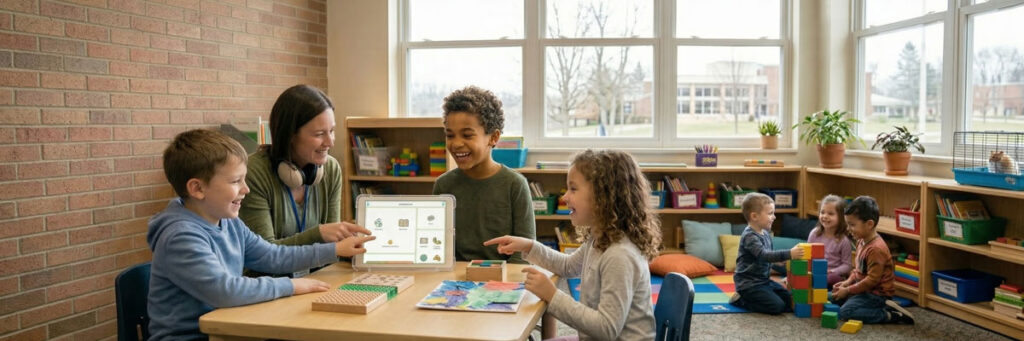
• Picture-based communication systems
• Devices that generate speech
• Single words or short phrases
Recognizing and responding to all forms of communication helps children feel understood and encourages them to continue interacting.
Creating Opportunities for Communication at Home
Daily activities naturally provide moments for communication. Caregivers can use these moments to encourage interaction without adding pressure.
Simple ways to create opportunities include:
• Offering choices between two items
• Pausing during activities to allow the child to respond
• Placing preferred items slightly out of reach
• Waiting expectantly after asking a question
These small adjustments give children time and motivation to communicate in ways that feel comfortable for them.
Using Everyday Interactions to Encourage Language
Communication can be supported during routine interactions such as mealtime, playtime, or getting ready for the day.
For example:
• During meals, caregivers can model words for food and drinks
• During play, they can label actions or objects
• During shared activities, they can describe what is happening
Using simple and clear language helps children connect words with actions and objects in their environment.
Responding to Communication Attempts
When a child attempts to communicate, the response they receive matters. Acknowledging their effort encourages continued interaction.
Caregivers can respond by:
• Repeating or expanding what the child communicated
• Providing the requested item or action when appropriate
• Showing attention and engagement
Even small communication attempts are meaningful and can be built upon over time.
Encouraging Communication Without Pressure
Children may need time to develop communication skills at their own pace. Creating a supportive environment means allowing space for attempts without forcing responses.
Caregivers can support this by:
• Giving extra time to respond
• Avoiding repeated prompts
• Keeping interactions positive and relaxed
This approach helps children feel more comfortable participating in communication throughout the day.
Connecting Communication to Daily Life
Communication is most meaningful when it is connected to real-life experiences. Practicing communication during everyday activities helps children understand how to use their skills in different settings.
For caregivers interested in additional ways to support learning during daily activities, exploring our guide on turning daily routines into learning opportunities through positive reinforcement can provide further insight into how everyday moments can support development.
Supporting Communication as a Family
Caregivers play an important role in creating an environment where communication is encouraged and supported. Consistency across family members helps children experience similar responses and expectations throughout their day.
By focusing on simple, natural interactions, families can create opportunities for communication that feel engaging and meaningful within everyday life.
Over time, these shared experiences help children participate more actively in their environment and connect with the people around them.